Rethinking the Student Summit Job Board
Transformed a sponsor-first, fragmented job discovery experience into a centralized, student-focused, automated job board, improving usability, transparency, and internal efficiency.
Role
Senior UX Designer & No-Code Developer
Employer
TAPPI (The Technical Association of the Pulp & Paper Industry)
Platform
Cvent, Softr, Google Sheets, Google Forms
Skills
UX Strategy, No-Code Development, Automation, Workflow Optimization
Background
The original job discovery experience for TAPPI’s Student Summit relied on a grid of sponsor logos. Students had to click through multiple logos to find relevant job postings, often encountering empty pages or incomplete information.
From the internal perspective:
TAPPI staff manually updated multiple sponsor pages with duplicated job content.
The process was time-consuming, error-prone, and difficult to maintain.
Problem Statement:
How might we make it easier for students to discover relevant job opportunities, while simultaneously reducing internal workload and maintaining sponsor visibility?
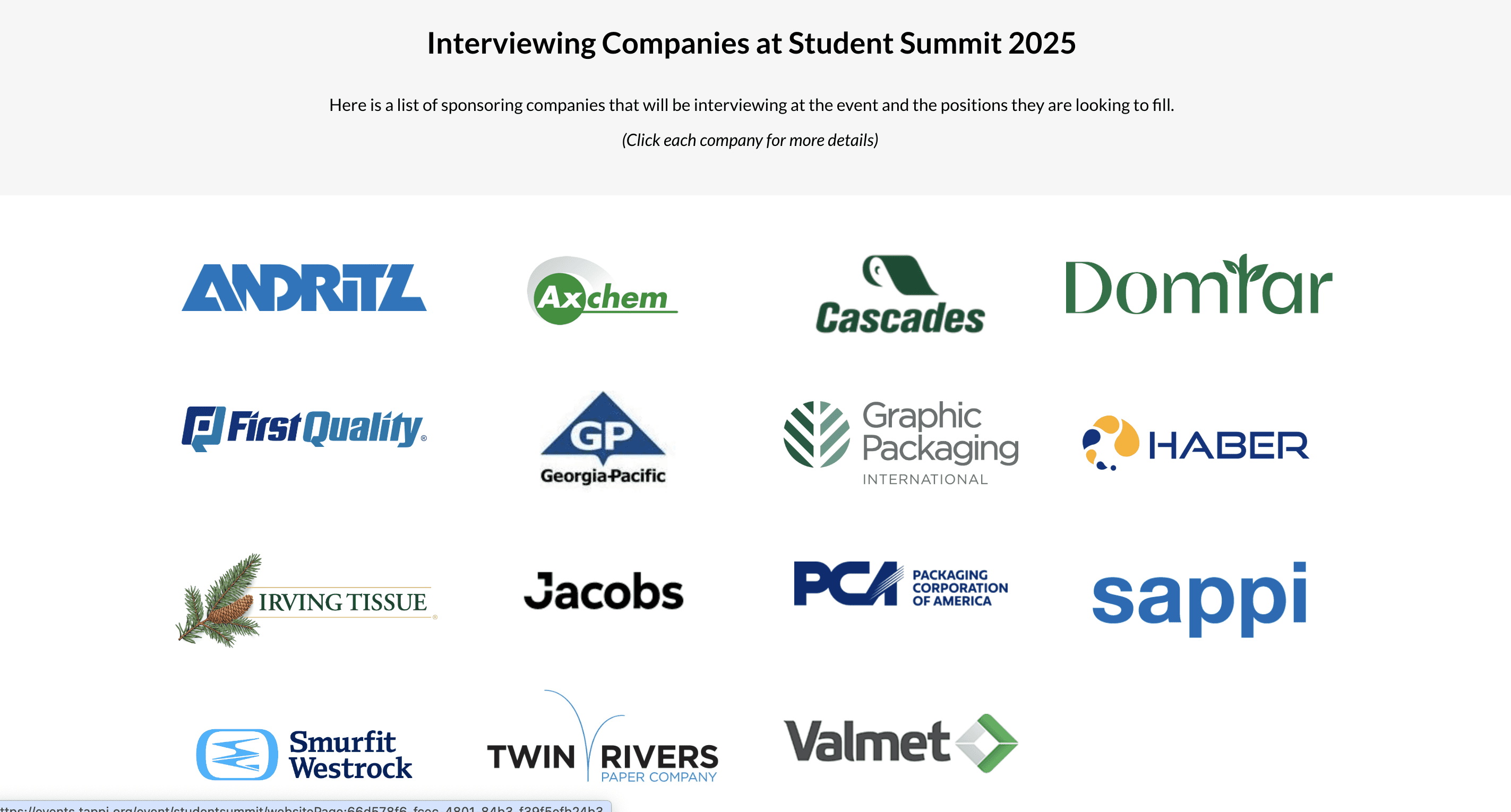
Before: Grid of clickable sponsor logos

Clicking a sponsor logo took users to a sponsor profile displaying a list of positions. However, these positions were not linked to actual opportunities, and in some cases, no positions were listed at all—resulting in frustration for users who clicked through multiple logos in search of jobs.
The Process
Research & Strategy
Audited the existing job board and gathered feedback from students and internal stakeholders.
Identified key user pain points: poor discoverability, lack of transparency, and inconsistent information.
Defined goals for a centralized, automated, student-first experience.
Design & Implementation
Designed a searchable, filterable job board in Softr, integrating live data from Google Sheets populated via Google Forms.
Reversed the flow from sponsor-first → student-first, surfacing job listings upfront.
Built an automated backend workflow:
Companies submit listings via Google Form
Data auto-populates a Google Sheet
Softr renders listings in real-time across multiple views
Created separate views for “All Listings” vs. “Interviewing Companies” without duplicating content.
Applied branded visual system to improve clarity, accessibility, and mobile responsiveness.
Content Design & Information Architecture
Designed content hierarchy and labeling to surface jobs first, clarifying what information mattered most to students at each step.
Wrote and structured instructional microcopy to explain filters, categories, and next steps without overwhelming users.
Defined section headers, empty-state messaging, and role descriptors to reduce ambiguity and decision friction.
Balanced sponsor visibility with student clarity by separating brand presence from job content, improving trust and comprehension.
Automation & Scalability
Reduced manual data entry and eliminated duplicated updates.
Embedded the live job board into multiple Cvent pages via iframe, updating in real time.
Scalable architecture allows the system to be reused for future events with minimal effort.

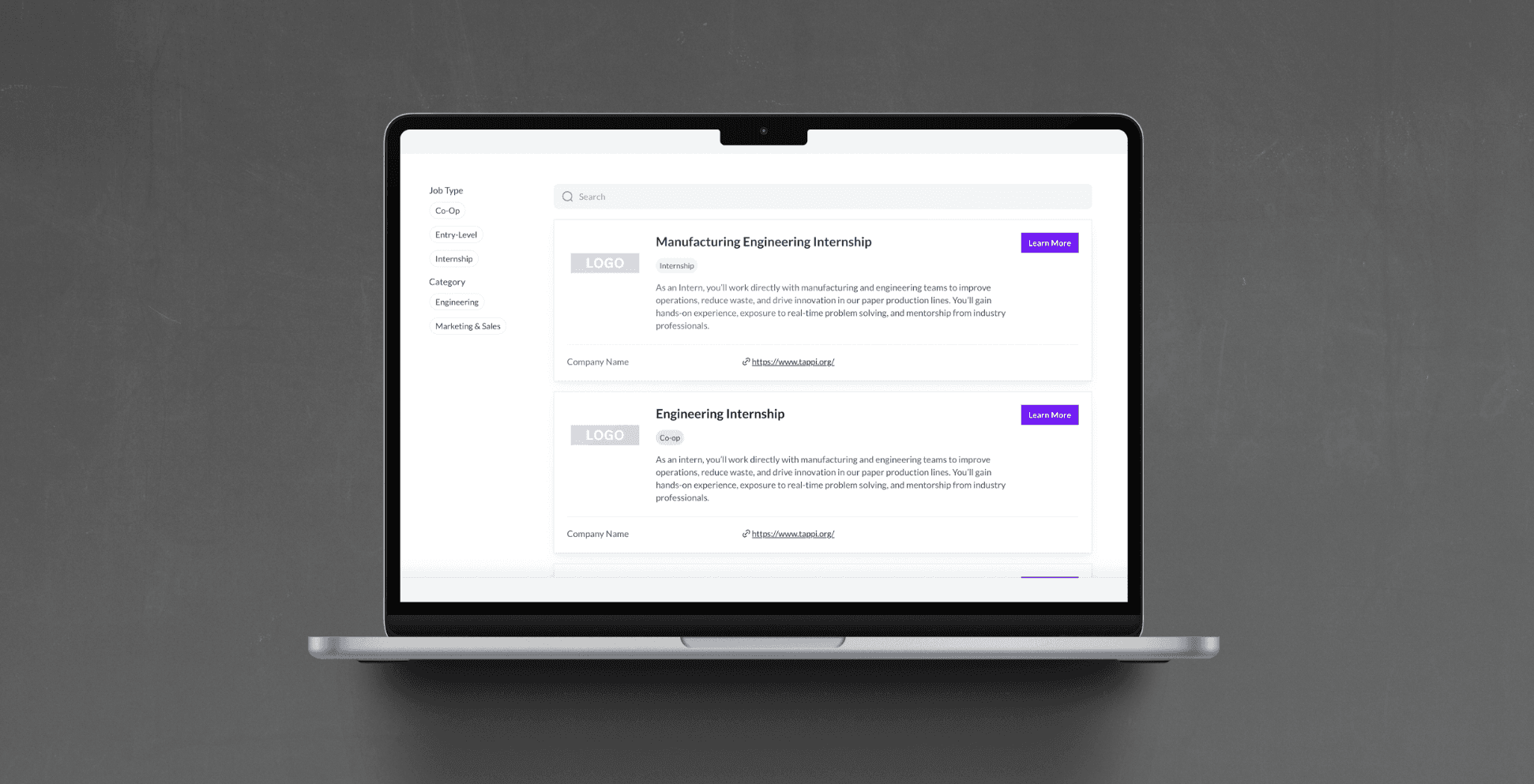
Redesigned to feature a searchable, filterable list of open positions - giving students direct access to relevant roles instead of browsing a static wall of sponsor logos.
Filter by job type, major, or company
Automated submission flow via Google Forms
Live data sync with Google Sheets
Separate views for “All Listings” and “Interviewing Companies”
Branded design that matches the Student Summit site
Improved accessibility and mobile responsiveness
Company submits job info
via a Google Form
Job details populate
in a connected Google Sheet
Impact (Expected + Strategic Value)
Enhanced UX: Students can find relevant opportunities in seconds rather than browsing irrelevant sponsor pages.
Increased transparency: Centralized listings clearly indicate which companies are actively hiring.
Reduced internal workload: Automations eliminated repetitive data entry and errors.
Scalable & reusable system: Can be applied to future Student Summit events with minimal setup.
Sponsor visibility: Companies receive meaningful presence while students benefit from clear, accessible information.